A Line Made of Absence, Not Material
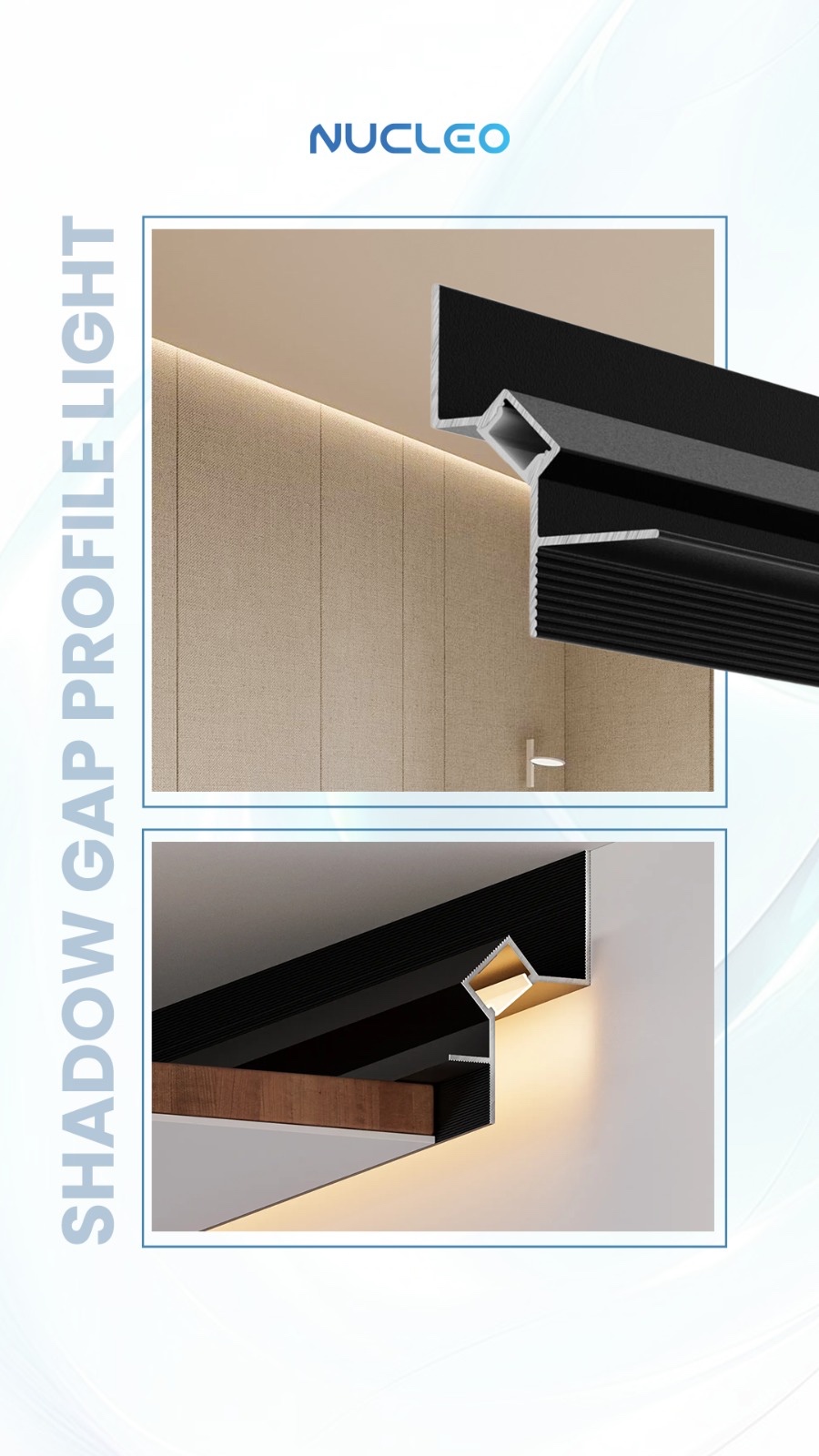
Most junctions between surfaces are solved by adding something: a cornice at the ceiling, a skirting board at the floor, a trim strip at a panel edge. The XF5 solves the same junctions by taking something away. It cuts a precise, consistent recess into the surface itself, and lets the resulting shadow do the work that a moulding used to do — defining the edge, marking the transition, giving the eye a clean line to follow.
Because the detail is negative space rather than applied trim, it reads as quieter and more deliberate — closer to how a piece of furniture or a fitted joinery line is finished than how a traditional ceiling border is finished. The channel running inside the recess is where the XF5 goes further: fit a LED strip into it, and the same line that reads as pure shadow in daylight becomes a source of soft, sourceless light after dark.
From Raw Junction to Finished Line
Fix the Profile
The XF5 is screwed or adhesive-fixed to the substrate at the junction — before any plaster, paint, or board finish goes on.
Finish Around It
Plaster, jointing compound, or gypboard is worked up to the profile's flange, so the flange sits flush with the final surface.
Paint the Surface
Wall and ceiling are painted as one continuous surface — the flange takes paint too, so it disappears into the finish.
Fit the LED Last
Once construction dust and finishing work are done, the LED strip is inserted into the clean, protected internal channel.
Why Interiors Are Dropping the Cornice
A traditional cornice adds material and visual weight at exactly the point where a ceiling meets a wall — the place most interiors want to look lightest. The XF5 removes that weight entirely. Instead of a raised moulding catching the eye, a thin dark line recedes into shadow, and the wall-ceiling junction stops competing with everything else in the room. This is the same logic behind flush skirtings and trimless door frames — the detail disappears so the space reads as one continuous volume, broken only by a deliberate line of shadow where the designer wants attention.
Key Features
Consistent Reveal Depth
Because the recess is formed by the extrusion, not by hand-finishing plaster, every metre of the run shows the same shadow depth and width, corner to corner.
Concealed LED Channel
An internal channel sized for standard LED strips sits inside the recess — the strip stays fully hidden from any normal viewing angle in the room.
Flush-Finish Flanges
Flanges are designed to take paint, plaster skim, or board finish directly, so the profile body disappears into the surrounding surface once painted.
Runs in Any Direction
Horizontal at a ceiling perimeter, vertical on a feature wall, or along a staircase stringer — the same profile handles all three without a different part number.
Anodised Aluminium Body
The extrusion resists the corrosion and warping that timber or gypsum-only reveal details are prone to over years of use.
Field-Mitred Corners
Cuts and mitres cleanly on site with standard tools, so internal and external corners are joined the same way a cornice or skirting would be.
One Line, Two Readings
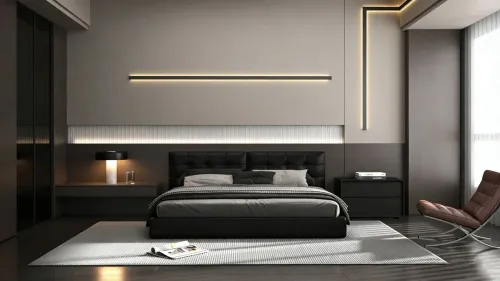
By day, or with the LED strip switched off, the XF5 reads purely as an architectural line — a recessed shadow that separates ceiling from wall or panel from panel. Switch the strip on, and the same recess becomes the source of a soft, indirect wash across the adjacent surface. Nothing about the visible detail changes between the two states — no fixture appears, no new element is added — only the light within the existing line turns on or off. This is what distinguishes a shadow gap from a visible strip light or a batten fixture: the architecture and the lighting are the same object.
Where Designers Are Specifying the XF5
Apartments & Villas
Cornice-free ceiling perimeters and skirting-free floor lines in minimalist residential interiors
Boutique Hotels
Guest room ceiling lines and corridor edges finished as a signature detail rather than a standard trim
Fine-Dining Spaces
Low, warm indirect wash along the ceiling perimeter without a visible fixture anywhere in the room
Corporate Interiors
Boardrooms and reception ceilings that need a clean architectural line without a heavy cornice
Statement Walls
Vertical shadow lines that frame a feature wall, headboard, or joinery panel without applied beading
Stair Wall Lines
A continuous recessed line following a staircase run, lit for wayfinding on the flight
Wellness & Spa Interiors
Soft, sourceless ambient light along ceiling and wall junctions in treatment and relaxation rooms
Retail Flagship Stores
Ceiling and display-wall lines that keep visual focus on merchandise rather than on fixtures
Frequently Asked Questions
Replace a Trim With a Line of Shadow
Contact Nucleo for the XF5 Shadow Gap Aluminium Profile — dimensions, samples, and technical support available pan-India.