Thank you for writing to us. One of our executive will reach back to you through your submitted medium. In case there’s an urgency, feel free to connect over WhatsApp for faster response.
Prefer calling? Dial +918591141102 (International callers) or +918591141102 (Indian callers).
A ceiling that floats, and a wall that stays sharp
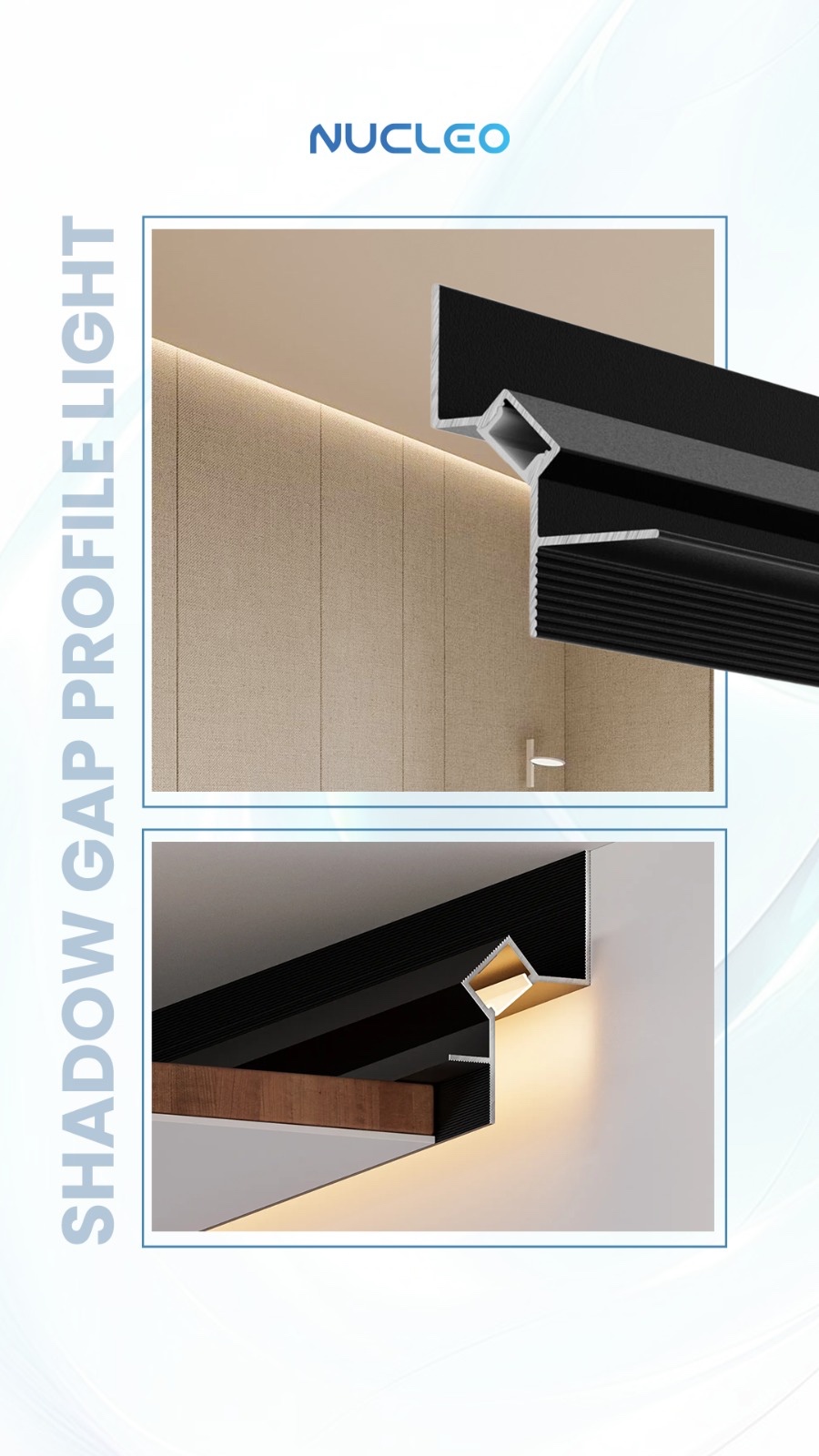
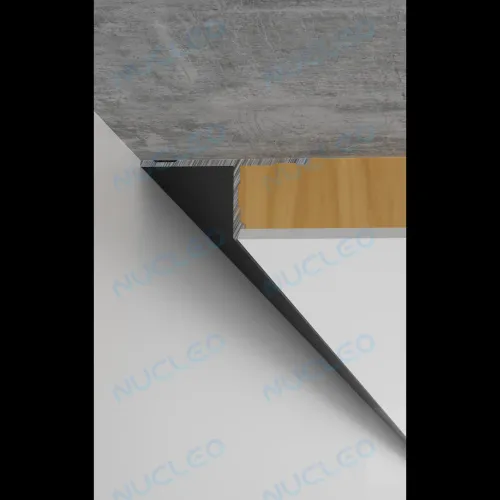
The XF5 is a plaster-in shadow gap profile. It cuts a crisp reveal where surfaces meet and carries an optional channel for a hidden line of light.
Plaster-inShadow GapOptional LED ChannelFloating Ceiling
The junction is where a room is judged
Look at any well-finished interior and your eye lands on the edges: where the ceiling meets the wall, where a panel meets plaster, where the floor meets a skirting. A plastered butt joint at these points is rarely straight, and it cracks as the building moves.
The XF5 replaces that joint with a deliberate groove. The groove is dark, narrow and perfectly straight, so the two surfaces read as separate planes with air between them. Add a strip of light inside it and the same detail becomes a source of soft, shadowless illumination that seems to come from nowhere.
One detail, two jobs
The gap works as architecture when the strip is off and as lighting when it is on. You decide at design stage, or leave the channel empty and decide later.
What you see when it is installed
Unlit, the XF5 gives a thin black line that sharpens every edge it follows. Lit, a narrow band of warm or neutral light spills along the ceiling or wall from inside the reveal. There is no visible fitting, no diffuser lip and no hotspot, only a clean line.
Planning note
Run the profile before final plastering and keep the surfaces on both sides flat. The straighter the substrate, the more precise the shadow line looks once painted.
Why designers specify the XF5
Sharp, permanent edge
The aluminium flange holds the plaster line straight and stops corner cracking at the junction.
Floating ceiling effect
A dark reveal visually detaches the ceiling from the wall, making low rooms feel taller.
Hidden light source
The optional LED channel keeps the strip out of sight so you see the glow, not the fitting.
Finishes flush
Plaster or jointing compound meets the flange, leaving no screws, trims or raw edges on show.
Light now or later
Install the profile during the build and add the LED strip at handover or a later upgrade.
Pairs with any strip
Choose warm, neutral or tunable white to match the room. The strip is sold separately.
Durable aluminium
A rigid extrusion that resists warping and keeps a straight line over long runs.
Clean junction on site
Standard lengths cut on site and align neatly, which speeds up the finishing trades.
Where it works
Living rooms
Floating ceiling with a quiet perimeter glow for evenings.
Bedrooms
Soft indirect light that avoids glare when lying down.
Hotel lobbies
Crisp wall-ceiling lines that suit high, formal spaces.
Offices
Neutral reveals that frame partitions and reception walls.
Retail stores
Lit reveals that define display walls without extra fixtures.
Restaurants and cafés
Warm perimeter light that sets mood without visible sources.
Feature walls
Vertical or horizontal reveals between panels and cladding.
Staircases
A lit line along the wall that guides the eye up the flight.
Corridors
Continuous reveal that visually lengthens and straightens a passage.
Showrooms and galleries
Neutral shadow lines that let the exhibits carry the colour.
Questions we hear on site
It forms a clean, recessed groove where two surfaces meet. The groove reads as a dark line that separates wall from ceiling, so the ceiling appears to float. It also protects the plaster edge, which is the part of a conventional corner that cracks first.
During. The profile is fixed to the substrate or board first, then plaster or jointing compound is finished up to its flange. Once painted, the flange disappears and only the sharp gap remains.
No. On its own the XF5 gives a precise shadow line. The LED channel is optional and can be used from day one or left empty and lit later.
No. The LED strip and driver are selected separately, so you can choose the colour temperature and brightness that suit the room.
Warm white (2700K to 3000K) suits bedrooms, living rooms and hospitality. Neutral white suits offices and retail. Keep one temperature across a room so the glow along the wall reads as a single line.
The XF5 is a straight extrusion intended for linear runs. For curved ceilings or walls, use one of Nucleo's flexible aluminium profiles instead.
Cut each length square or mitre it for the corner, align the channels before plastering, and fix both lengths to the substrate so they cannot shift. Keeping the LED strip continuous through the corner avoids a dark spot.
Planning a floating ceiling?
Tell us your room, run lengths and finish. We will help you pick the profile and a matching strip.